About Us
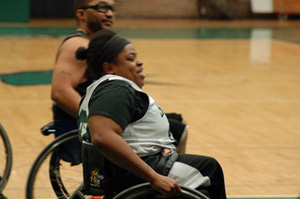
The Abilities Office of Student Services advances the institutional mission of Chicago State University by delivering quality services, trainings, and resources.
The Abilities Office is dedicated to ensuring access to education through reasonable and appropriate accommodations for all students with disabilities as mandated by the American with Disabilities Act and Section 504 of the Rehabilitation Act of 1973.
Chicago State University is committed to providing students with a disability an equal opportunity to access the benefits, rights and privileges of University services, programs and activities in accordance with Section 504 of the Rehabilitation Act of 1973 (Section 504) and Title II of the Americans with Disabilities Act of 1990 (Title II), as amended.
Qualified students with disabilities, who seek reasonable accommodations and support services, including use of auxiliary aids or programmatic modifications or adjustments, must register with the Abilities Office. The registration process will require documentation of the disability. Contact the Abilities Office Coordinator for additional guidelines. The Abilities Office is located in the Cordell Reed Student Union Building, Suite 160, telephone (Voice) (773) 995-2380, (TTY) (773) 995-3761.
Note: Petitions filed by students based on circumstances that could constitute a request for an academic adjustment or modification based upon a disability as defined by Section 504 of the Rehabilitation Act of 1973 and the Americans with Disabilities Act of 1990 will be referred to and processed by the Abilities Office.
Accommodations
The purpose of academic accommodations is to assure that there is equal access to and the opportunity to benefit from all educational programs of Chicago State University. Chicago State acts in accordance with two relevant laws: Section 504 of the Rehabilitation Act of 1973 and the Americans with Disabilities Act.
Here are some important things to know about academic accommodations:
- provide students with disabilities with equal access to course instruction, course materials, and academic evaluation
- “level the playing field” and minimize the impact of the student’s disability on their academic performance
- do not guarantee success and do not provide an unfair advantage
- must be reasonable and cannot alter the essential requirements of the course
- are individualized and determined through an iterative process
If you ever have a question about how an accommodation applies in a class, please contact the Abilities Office at (773) 995-2380.
The American Psychological Association has created a disABILITY Resource Toolkit (DART) that addresses questions and concerns about providing reasonable accommodations to students with disabilities. Click Here for more information about Explaining Reasonable Accommodations.
Accessibility
Accessibility is the inclusive practice of making information, activities, and/or environments usable and meaningful for as many people as possible.
While the Apple ad is every bit of an “advertisement”, it carries a powerful message. Likewise, while the ad primarily focuses on what may be considered “visible disabilities” we do not want to ignore that there are conditions that rise to the level of disability that may not be as visually apparent as those seen in the video.
Inclusive design removes barriers. Thoughtful design allows opportunities for people to engage. And while inclusive design cannot alleviate EVERY single concern for every individual; intentional design of our spaces, activities, and materials provides greater access to more.
Confidentiality
The Abilities Office exercises confidentiality with student records as required by the Family Educational Rights and Privacy Act (FERPA) of 1974. Any confidential or protected health information and documentation the Abilities Office receives for a student provided by a student to the Abilities Office is confidential. The faculty, staff, and parents will not have access to these materials unless a student specifically requests, in writing, that an individual be allowed to view these documents or share in this information.
Working with the Abilities Office means sharing personal information — sometimes about your health, your learning, or things that are private. It is important that students feel safe doing this. That's why we have clear rules about who can see your information and when.
The Abilities Office keeps your records private. This is required by a law passed in 1974 called FERPA (Family Educational Rights and Privacy Act). Any private information you share with us, including health information; stays confidential. Faculty, staff, and even your parents cannot see this information unless you say it's okay, in writing.
Once you are enrolled in college, your parents do not automatically have access to your records anymore, even if they did when you were in high school. This is true no matter how old you are or whether your parents help pay for school. You are the one who decides who can see your information.
If you want a parent or someone else to be able to get information about your accommodations or records, you can fill out a form called Release of Information. This form lets you choose exactly who can see your information and what they're allowed to know. If you change your mind later, you ca
 ©
Chicago State University
©
Chicago State University  All Rights Reserved
 (773) 995-2000