Chicago State University Closing Skills Gaps
Chicago State University (CSU) views quantum as both a platform for innovation and an engine of workforce development. As the city’s growing quantum ecosystem—which encompasses research universities, national labs, industry partners, Chicago Public Schools and others—gains steam, CSU President Zaldwaynaka “Z” Scott explains how her school is creating accessible pathways from classrooms to careers.
How did Chicago State University become a force in the city’s quantum ecosystem?
For nearly a decade, our scientists have been exploring quantum and how it integrates with other research areas. As the state of Illinois began to build a stronger tech ecosystem—especially around quantum and microelectronics—we saw a clear alignment with Chicago State’s interests and mission. What really sharpened the strategy was recognizing the need for skilled workers in this emerging field. We started to look at how CSU could be a catalyst for inclusive innovation, given our location less than five miles from the planned Illinois Quantum Microelectronics Park (IQMP) on Chicago’s South Side and our status as the only federally designated four-year Predominantly Black Institution in Illinois.
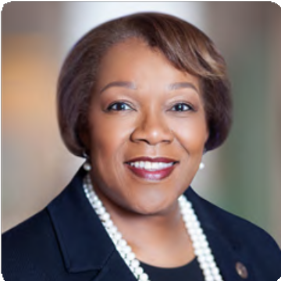
President Scott’s advice:
“Be intentional about who should be at the table. Make sure that your invitation list has a broad section of the community present.”
"When you coordinate intentionally—across institutions, sectors, and neighborhoods—you can grow both science and communities together.” - Zaldwaynaka Scott, President, Chicago State University"
How does CSU’s quantum strategy support skills development?
Our goal isn’t just to do advanced science. It’s to make sure communities understand the opportunity and are able to participate in it. Closing skills gaps requires intentional planning from the start. That means designing educational pathways that span elementary through high school, certificates, undergraduate study and master’s degree programs, and research experiences. We’re looking at it all as a way for us to engage.
What does that approach look like in practice?
We’ve partnered with the University of Chicago on quantum summer camps for high school students. We’ve brought Chicago Public Schools science teachers to our campus to give them training, tools, and materials to teach quantum concepts in their high-school classrooms. We offer entry-level microelectronics courses on our campus with the goal of preparing students for entry level jobs and real economic opportunity. That’s just a few examples.
How is CSU balancing near term job readiness with long term quantum futures?
We’ve been very proactive. We are the first in Illinois to offer Illinois Board of Higher Education-certified quantum minor and quantum certificate programs so students can supplement their majors with relevant skills. We already have hundreds of students interested, and our first certificate graduates are entering the workforce now and making an impact. For instance, one graduate will begin a joint research project with Harvard and another will begin a research position at Pfizer. There is of course no way to offer students complete knowledge in such a fast-changing space. We try to give students a strong foundation to take into jobs, where they can continue to grow and keep up depending on the field they enter.
How is the university supporting longer-term research and collaborations that push quantum forward?
We established the CSU Quantum Education, Science & Technology Center so this work has a permanent institutional home. We’ve built a cross disciplinary team at the center, because we know quantum won’t live only in STEM, it will touch many disciplines. We hope this center helps to grow our collaborative relationship with Argonne National Laboratory. We’re also a major educational partner in IQMP, a 128-acre research hub that will bring national labs, universities, government, and businesses together.
What does success look like 10 years from now?
Success is graduating students with quantum credentials that prepare them to work in that space. It’s having upgraded laboratories where students are learning alongside experienced researchers to get the campus experience they deserve. It’s seeing community members confident they aren’t locked out of opportunity. And it’s proving that when you coordinate intentionally—across institutions, sectors, and neighborhoods—you can grow both science and communities together.
 ©
Chicago State University
©
Chicago State University  All Rights Reserved
 (773) 995-2000